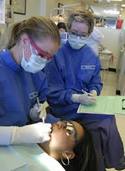
The dental patient guide is designed to give you information about becoming a patient in an educational setting. It explains the processes involved and offers you insight into how affordable family dental care is provided in this type of setting.
Basically, dental school clinics will accept you as a dental patient for treatment if your needs can be resolved by a dental student or resident and if your schedule allows you to be present for extended appointments.
The goal of the dental school is to provide the dental patient with high quality treatment at reduced fee prices. Affordable family dental care is provided by dental students and residents under the close supervision of expert teaching staff. This guide provides general information on:
First, an evaluation of your dental needs is done to assure that you may benefit from student services. Most dental schools require about a two hour assessment period. Some schools may also require that you complete an application before they even consider an evaluation.
Dental schools which require an application use it as a "screening" exam. Completion of the application does not guarantee acceptance as a patient. Dental x-rays and a comprehensive oral examination is often necessary as well. There are charges associated with these procedures. While the charges are minimal at a dental school clinic, you may still want to consider using a discounted dental plan to help with the costs associated with the initial dental examination fees. In fact, the dental examination fees associated with a dental plan may actually be lower with that of a dental school. You may choose to use a discounted dental plan to get your initially assessment through a participating dental provider and then take a copy of your x-rays and the treatment plan with you to the dental school. As far as I know, there are no dental schools which participate in discounted dental plan networks at this time. Priority may be also given to those applicants with dental problems which fit the teaching programs of the dental school.
Time requirements are extensive; therefore, the cooperation and understanding of the patient is necessary. You may be asked to be available for appointments on mornings, afternoons or evenings of each week for approximately 6-12 months. Dental patients are normally expected to be seen at least once a month. If you cannot devote the required amount of time, it is suggested that you consider using the services of a private dentist.
When you are accepted as a dental patient, you are assigned to a dental student. The policy for some schools is that the dental student contacts you and schedules your appointments; For other schools, your appointments are made through the clinic receptionist.
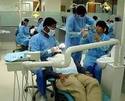
Because of the rigid demands placed upon a dental student's time, most clinics require advance notification to reschedule an appointment. Some ask that you notify the student at least two school days in advance, others ask for 24 hours notification. In almost all cases, repeated tardiness or broken appointments will result in termination of your being treated at that particular facility.
Your Rights as a Dental Patient
If you are accepted as a dental patient in a dental school facility, you have the right to expect:
Privacy & Confidentiality regarding health conditions and treatment.
Respect & Courtesy in a safe environment.
Care that is continuous, complete, and high quality.
Information that is complete and easy to understand.
Participation in decision-making about treatment benefits, risks, and alternatives.
Prompt responses to needs, questions, and concerns.
The Treatment Plan Process
When you agree to dental treatment, you should have a clear contract with your dental provider. It should define the goals and nature of the treatment and the expected costs involved. Although it could be verbal or implied, it is good practice to obtain written agreement for the sake of everyone involved. A treatment plan would be an example of this type of written agreement.
Before treatment can begin, a treatment plan is developed and discussed with you. Treatment planning is essential to the successful outcome of comprehensive dental care. Planning should be based on an oral examination (see a basic oral exam video below), referral evaluations and an objective assessment of the dental patient's expectations. This process requires open communication between both the dental patient and the dental provider. The treatment plan process is explained in more detail below.
A Basic Oral Examination 3:00 (min), provided courtesy of www.youtube.com/user/bkbroadwell
Treatment Plan - Developing A Problem List
The treatment plan outlines the way that the dentist will approach the dental work that is needed - it should include both goals and alternative treatment options. The treatment plan involves administering dental care in sequences or stages, and is always a work in progress - it can be changed or modified at any time.
The treatment plan is developed using a combination of the following patient data:
Medical Status
Dental History
Psychological Status
Personal Habits, History and Expectations
Medical Status
A full medical history is essential. Medical conditions may influence all aspects of dental treatment (where and by whom it is performed, the number of visits and length of appointments). Certain conditions may require that you be referred to a specialist for care, or require that the treatment be carried out in consultation with a medical practitioner or hospital specialist. It is important that you advise the dentist of any change in your medical status during the course of treatment. Failure to disclose critical information could have adverse medical consequences.
Dental History
Your past dental treatment and attendance pattern may be an indication of your behavior towards treatment and your oral health needs. An example of this may be found when doing an oral examination which shows areas of the mouth that have been left untreated for a long period of time. While patients do change lifestyles and attitudes, most dentists may plan to monitor you before beginning any extensive dental treatment. If you have any missing teeth, the dentist will ask for information as to how and when tooth loss occurred. Details of the symptoms associated with past tooth loss may reveal information as to the nature of previous dental disease.
If you have a dentist emergency, your dentist should discuss the nature and history of the dental emergency. Your dentist should ask open-ended questions in order to gather the most information on how you perceive the problem. You should be made to feel like you are contributing in the process.
Psychological Status
An assessment of your psychological status may provide further insight as to how best develop a treatment plan. A history of a mental disorder may limit the treatment options and necessitate your dentist developing an interim plan as your treatment progresses. If you suffer from a mental illness disorder, this information may need to be confirmed and/or discussed with other health care personnel.
Personal Habits, History and Expectations
Patient habits often are confirmed by clinical examinations. Habits such as substance abuse may be suspected during this process and may require further investigation.
Your personal history, (occupation, employment status, economic status, social status, and attitude to dental treatment) may influence treatment plan options as well as your own expectations.
As a dental patient, your eligibility for funded treatment or your ability to pay the cost should also be considered when the treatment plan is being developed. But, your economic status should not lead to a "second-rate" treatment plan. You should expect to be provided with a number of treatment options to consider. Keep in mind that whatever treatment plan you approve, it is essential that no member of the dental team gives you an unrealistic expectation of the outcome of treatment.
After the problem list is developed, the dentist will then proceed to the problem solving aspect of the treatment planning process.
Treatment Plan - Outlining Solutions List
The process of solving the problems that have been outlined in the treatment plan begin with those complex problems being divided into smaller sequential parts. This makes it easier to understand and solve the nature of the problem. Priority is always given to urgent matters or those which are potentially harmful to a patient’s general health. This is followed by the removal and/or control of pathological factors such as caries (cavities). Accordingly, treatments which create oral health and maintain general health may be considered a priority after pain relief.
As a dental patient, you should be encouraged to feel like you are participating in the treatment planning process. Your dentist should use phrases such as "Tell me about...", "How do you feel about..." in order to elicit more information regarding your attitude and wishes. They should be facilitating a rapport with you. In this way, an effective relationship may be established between you and the dentist, leading to optimum exchange of information.
Note: One of the methods which dentists use to gain insight into the dental patient is to use a questionnaire. Questionnaires designed to collect patient information can assess the patient’s perception of almost anything – their attitude toward dentists or their oral health status. You should be made aware that any information you provide to the dentist will be treated confidentially. As a dental patient, you should also be assured of the confidentiality of all matters discussed.
Presenting the Treatment Plan
You should be presented with at least 3 treatment plans alternatives that have been based upon the factors outlined above. These plans are based primarily on the economical factors. They are the Ideal, Best and Cost Conscious Treatment Plans. These may not be the exact terms that are used, but the concept behind them is the same. Each plan should be examined and a choice made for the “best fit” with your particular needs as a patient. Having alternative treatment plans allows you, as a dental patient, to choose the best dental plan which meets your particular circumstance. Each treatment plan is explained in detail below.
Ideal Treatment Plan. This treatment plan is for a dental patient who is not too concerned with the costs of their care. They are able to pay for their care out of pocket with out worry. Implants and Cosmetic procedures (veneers, laminates, invisalign braces), are usually their expected outcome.
The next type of treatment plan is the Best Treatment Plan. This plan is designed for the dental patient who generally has insurance and may be able to pay a little more out of pocket expenses. Reconstructive work may be their primary needs with a cosmetic or a implant procedure being part of their treatment outcome.
The final treatment plan model is the Cost Conscientious Treatment Plan. This plan is designed to provide as much basic dental work that is needed, in order for the dental patient to have a functional mouth (being able to chew food). This type of plan may involve those dental patients who do not have insurance or other resources that would allow them to select a more favorable procedure (a Fixed Bridge) over another (a Partial Denture).
Your Final Treatment Plan
Once you have selected the treatment plan that is desirable to you, it is divided into phases by way of a "staircase" approach, with one clinical step being dependent upon the previous step. If difficulties occur in one of these steps or stages, a reassessment of the treatment plan is done.
Phases must be planned in an appropriate order, initially aiming to eliminate any pain or discomfort and to control active disease. Following this, the patient’s response may be assessed. This may include a dental observation of the patient with regard to oral hygiene instruction or counseling to stop smoking. There may also be instances in which the prognosis of certain aspects of treatment is uncertain, and in these cases, it would be best to stop and review your progress from time to time. A systematic review of progress is desirable during any course of treatment.
Example of a Treatment Plan
Following is a treatment plan example for a dental patient who is in generally good health. This dental patient needs to have a) a root canal and crown on tooth number 9 and b) dental fillings on tooth nos. 23 and 27.
The treatment plan sequence or stages for this patient should be as follows:
Sequential Treatment Plan
Stage 1: Cleaning and Oral Health Education
Stage 1 always involves a full mouth prophy or scaling. Cleaning the mouth can provide the dentist further information about a tooth or area of the mouth. A new problem will be added to the treatment plan and discussed with the dental patient accordingly.
At this stage, the dental patient is also provided with oral health instruction. If necessary, patients are shown the proper techniques to use for brushing and flossing in order to enjoy greater oral health.
Stage 2: Stabilization and Referral Stage
Because the dental patient needs to have fillings performed on tooth nos. 23 and 27, the dentist believes that the caries on tooth no. 23 is very deep and refers the patient to have an endodontic evaluation to determine if a root canal should be performed. This shows good dentistry.
Although an endodontic evaluation may reveal that the filling could be done without the patient having to have a root canal, then subsequent post/core and crown, the decision for the evaluation was a very proactive one.
Many patients do not find out that they need to have more major work performed on a tooth until a procedure is being done on that tooth. In this case, proposing the evaluation, as well as providing the explanation and the possibility of additional costs, will save both the dental patient and dental provider anxiety down the line.
While the dental patient waits for the evaluation on tooth no. 23, the dentist will do the filling on tooth no 27. This is to remove tooth decay and stabilize the carious lesion.
Stage 3: Restorative Work
This stage involves reconstructing the tooth. It often involves more major work such as crowns, bridges and dentures. In this dental patient’s case, they are having a crown on tooth number 9. Remember, if the endodontic consultation on tooth no. 23 reveals the need for a root canal, then tooth no. 23 will move from a stage 2 procedure to a stage 3 procedure.
Stage 4: Post-Op/Recall
This is the final stage of treatment. The dental patient is provided with post operative information, and given instructions to follow up for recall visits. They may also be given emergency information as it relates to their procedure.
Note: If the dental patient was experiencing pain on any of the above teeth,then the dentist would first eliminate any pain or discomfort. Then he would move to controlling any active disease (caries). Therefore, in this example, the dental cleaning would occur in Stage 2 of the treatment, and each subsequent stage would move further down the treatment plan.
In summary, the ideal treatment plan for a dental patient is one that is directed to enhancing your oral health, the prevention of disease and freedom from pain and discomfort. It should also fit your needs, and prove to be cost-effective. It should not be confused with an idealistic treatment plan which uses the most clinically advanced and expensive procedures.
Consenting to Treatment
Before your treatment can begin, your dentist must have your valid consent. This is usually in the form of a signature on the treatment plan. For such consent to be valid, the purpose, nature, likely side-effects, risks of treatment and likelihood of success must be discussed with you along with treatment alternatives. In addition to a verbal discussion, I would ask for a copy of any treatment plan for which I am signing and consenting to. Having a copy of a treatment plan serves as a reference tool and can be used to prevent misunderstandings.
As a dental patient, you must fully understand what you are consenting to, and the consent must be freely given. Consent is related to the ability to understand and make a balanced and informed judgment. If a treatment plan changes, the changes and their implications must be fully explained to you and your agreement must be obtained before such treatment is rendered.
Expediting Dental Treatment
When deciding to become a dental patient at a dental school, it is important to remember that the treatment is being provided by a dental student, under the supervision of a faculty member. Because the environment is a student supervised one, dental procedures are not completed in a time frame similar to that of a private dentist. Many dental patients often feel as if the work is taking forever, but, do are unaware of the many factors which can contribute to the sometimes slow process of completing a procedure.
According to most dental students, while there are many factors which may contribute to a longer treatment period, the faculty to student ratio is seen as the main cause for treatment delay. Almost every step of a procedure that a student completes must be reviewed and evaluated by a supervising faculty member. Depending upon the faculty to student ratio, this will greatly affect how much work is accomplished during a typical two hour dental visit. I have had students indicate that they have waited at times, for as long as 20 minutes, for a faculty member to review his/her case. Of course, this may have been isolated incidences based upon high rate of faculty absences for that particular day.

The faculty/student ratio is something you should inquire about before deciding to be treated at a dental school. It will be the main determinant of how long the treatment will last. It is important that you have a general idea of how long your treatment plan will take to complete prior to deciding whether or not to become a patient of record at that facility. This information should be indicated on the treatment plan as the approximate number of sessions or clinic visits.
In addition to faculty student ratios, another factor that could lengthen your treatment visit is your dental student's roster of patients. Most dental students’ may have on average, between 30-40 dental patients that they are providing dental care for. If they are assigned to the clinic for 20 hours per week, but are assigned to see each dental patient for 2 hours only, the most patients that they can see in a week would be 10. Getting a weekly appointment may be difficult, but there are ways around this:
Some students can work during their off-times. This means that they may be able to work in a clinic, even if they are not assigned to be there at that given time. Ask your student if they may be willing to work during an off session on a day that is convenient for you. Remember, if you commit to a particular day and time, show up for the appointment. It is easy to lose favor with students who have arranged to provide care for you outside of their assigned time and you do not show up.
If you live close by and have an open availability, arrange to have the student call you in the event that one of his other patients does not show up for an assigned appointment. Not only will you be getting closer to completing your treatment, but your student dentist will get a patient experience. Most dental students will appreciate this effort.
If you find it really difficult to get appointments in a timely fashion, speak with the Clinic Manager or Clinic Facilitator. They will work with the student to insure that you are being seen in a timely fashion, even if this means transferring your case to another dental student. This will be dependent upon the stage of your treatment plan. If you are in the middle of dental reconstruction involving a dental crown or dental bridge work, obviously the case would not be transferred. But, if you need some fillings (which should have been taken care of prior to beginning the other work), in addition to the dental reconstruction, you can ask to have that work done by another student. In this way, you are getting the work you need, and the student is not feeling pressured. Be sure to explain the situation to the student as well. Some dental students may take it personally, but realizing that you also have a life and want your work to be done as quickly as possible, is not asking for anything unreasonable.
Don’t feel obligated to stay with a dental student if you feel uncomfortable or if your needs are not being met. You are there to receive care that is comprehensive and in a timely manner. Some dental students, not all, have a tendency to call patients and cancel appointments. This behavior often coincides with an upcoming examination that the student must take. While this can be somewhat of a sensitive issue, it is usually the position of the school that the curriculum is design to provide students with ample time for studying and other extra clinic time. On the other hand, some students may find test taking to be a bit more difficult, and need the additional time. The last thing you want is to have a student administering care to you, and worrying about an upcoming examination. I would advise you to be aware of the added pressures of being a student, discuss these concerns with your student dentist, to ensure that they do not interfere with your comprehensive care. If your assigned student ever calls to cancel, give them the benefit of the doubt that one time. It may be a valid emergency that is keeping them away from the clinic. If there is ever a repeat cancellation, consider speaking with the Clinic Manager or Facilitator. You can have the discussion in confidence, asking for them to confirm the validity of the student cancellation.
Depending upon the response, be open to discussing the option of transferring to another student, especially if the treatment plan has not progressed to the major work stage. It is best to cut your losses early in the game, rather than get stuck with a student who either does not seem serious about learning dentistry, or is too overwhelmed at the time with other issues. This sends an important message to both the student and well as the Clinic Manager and Clinic Director that your dental care is important and you expect those who are providing the care to be professional providers, affordable dentist or not. If their response to your request to be transferred is not honored, speak with the Patient Advocate about transferring your case to another clinic within the school. The Patient Advocate works on behalf of the school to resolve issues as it relates to school providing affordable family dental care.
Encountering Unprofessional Behavior
In addition to student’s canceling appointments, a dental patient may encounter other forms of inappropriate behavior by a student, staff member or other school personnel.
If you find yourself in a situation that causes you to become upset, do not respond in anger. I find that a individual whose behavior seems rude or unprofessional, tends to act this way as a result of their being unhappy with some aspect of their lives. If you become defensive and angry in response to their behavior, it offers a reason for them to continue in their behavior. They are feeding upon your emotions. Instead of reacting in kind, calmly remove yourself from the situation, and ask to speak with someone in an authoritative capacity to help you to resolve the problem. At a dental school, the person you should initially contact would be either the Clinic Manager or Clinic Facilitator.
Provide the Clinic Manager with unbiased information. They need to handle the conflict by understanding what is happening. This may involve them asking both you and the person you are having problems with open-ended questions. Open-ended questions allows for the ability to put the conflict in perspective, as it offers background information. A person’s perspective of what is significant in a specific situation is usually the reason behind their actions.
In your discussion with the Clinic Manager, be certain to make a distinction between the problem and the person, refraining from blaming and voicing negative opinions about the other person. Placing blame, accusations and negative opinions are not skillful ways to express emotions. Be certain to provide clear, straight forward and concrete information, as well as indicating what you feel and want the outcome to be. Any opinions and emotions which you offer should only be expressed in ways that facilitates the process of achieving a satisfactory outcome. Then, invite the Clinic Manager to help in finding solutions. Formulate the issues as a shared problem that should be solved in a cooperative manner, between you, the Clinic Manager and the individual at the center of the conflict.
If the individual is invited into the discussions with you and the Clinic Manager, extend appreciation and respect for the individual where you can do so in a sincere manner. Make it easy for your counterpart to be constructive. Avoid putting them on the defensive by blaming, accusing and criticizing their behavior. Show empathy for their feelings without allowing yourself to be provoked by their attacks. Show your counterpart that you care about the issues and needs that are important to him or her. If warranted, take responsibility for your own contributions to the conflict. As a dental patient, it is important to remain open to learning new things about yourself and how others perceive you.
After reaching an amicable resolution, attempt to maintain contact with the individual. Sometimes a break in contact leads to the problem escalating. Do what you can to keep the communication going. This may involve something as simple as saying hello to the individual at your next dental appointment. The key is to work on improving the relationship, while you are a dental patient at the facility. Remember that other individuals work day to day with this person, and may be facing similar conflict issues. Only they have to work even harder to improve their relationship with this individual.
Remember, we cannot foresee what others are thinking and everyone has their own perspective on what is important and why. It is this perspective that determines how we handle conflict. And if you reflect on the issues of what is really important and significant and keep those values and needs at the forefront of your thoughts, you can handle any conflict with professionalism and ease.
If the issue you are facing is related to an error made during an actual procedure, there are remedies and solutions to these types of problems as well. Learn how to handle these types of situations here.
Did you find this page helpful? Do you need additional information on being a dental patient? If so, use the SiteSearch toolbar below to search for more information on the web.
The information on dental treating planning for the discounted dental plan page was provided by a document prepared on behalf of the British Society for Restorative Dentistry entitled "A Strategy For Planning Restorative Dental Care by
F.J.T.Burke D.D.S., M.Sc., B.D.S., M.D.S., F.D.S., M.G.D.S.R.C.S.(Edin.)(1),
J.M.Grummitt L.D.S.(2)
A.C.Shearer M.Sc., B.D.S., F.D.S., M.R.D.R.C.S.(Edin)(3), and
N.H.F.Wilson Ph.D., M.Sc., B.D.S., F.D.S., D.R.D., R.C.S.(Edin.), F.D.S.R.C.S.(Eng.)(3)
(1) University of Glasgow Dental School, 378 Sauchiehall Street,
Glasgow G2 3JZ, UK.