Root Canal Therapy
|
Root canal therapy is endodontic treatment designed to correct disorders of the dental pulp. The dental pulp is the soft tissue inside of the tooth and it contains nerves, blood vessels, and connective tissue. Previously, if a tooth had an abscess or an infected nerve, it was simply extracted. Now, in 95% of cases involving pulp infection, the tooth can be saved through endotherapy. In addition, advances in dentistry have made the process easier and less painful.
|
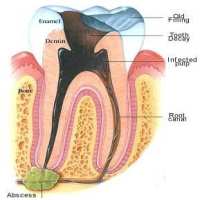
Root Canal TherapyDental pulp nerve damage can be caused by extensive tooth decay or trauma. Symptoms usually involve pain when biting down or chewing, sensitivity to hot or cold drinks, and facial swelling. The symptoms may also be similar to other oral health conditions, so it is important to have a consultation. |
Infected pulp chambers require root canal treatment. If left untreated, the infection can spread to the surrounding bone, making it weak and unable to support the tooth structure. Therefore it is important to get treatment as soon as possible. A dental root canal is recommended if the pulp in a tooth dies from infection or from trauma.
During a root canal, the pulp of the tooth, including the nerve and vascular tissues, is removed along with decayed portions of the tooth. The canals are instrumented with endodontic files to clean and shape them, and they are then usually filled with a rubber-like material called gutta percha. The tooth is filled and either a crown can be placed. Upon completion of the procedure, the tooth is now non-vital, as it is devoid of any living tissue.
The treatment process of root canal therapy involves some removal of the crown at the top of the tooth, to allow access to the affected pulpal tissue. When the affected pulpal tissue area is exposed, it can then be removed. The area surrounding the affected pulpal tissue is cleaned, enlarged and shaped to provide a clean, bondable surface for a filling to prevent further infection and discomfort. The whole process requires several office visits. This is to allow the endodontist to be certain that the infected pulp tissue and associated bacteria have been adequately removed.
If a root canal is performed on a molar tooth, this tooth may have enough tooth structure and a restorative material such as amalgam, can be placed on the tooth. Amalgam material is just as, if not as strong as crown material (with possibly the exception of gold). But who would spend a lot on money for a tooth to be encased in gold, if the tooth is primarily hidden in the back of the mouth. Use the money you are saving on the crown and purchase plane ticket for a vacation or put the money towards a cosmetic dental procedure you have been wanting to have.
Root Canal Therapy Process
|
When the decay is too extensive as in the photo to the right, there may not be enough tooth structure remaining to allow a restorative material to be placed within the tooth. In this case, a dental crown may be needed in addition to the root canal treatment, in order to complete the restoration of the tooth. |
 |
 |
 |
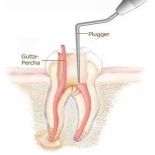 |
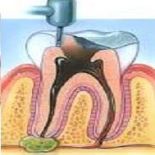
| Step 1: Accessing the Pulp After the tooth is administered anesthesia, an opening is made through the crown of the tooth to the pulp chamber. |
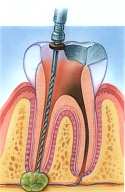
Step 2: Remove Infected Tissue Endo files are used to clean the infection and unhealthy pulp out of the canals. Irrigation is used to help clean the main canal. |
Step 3: Filling the Canals The canals are filled with a permanent material, most often gutta percha, to keep them free of infection and contamination. |
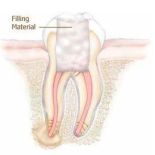 |
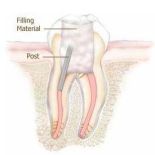 |
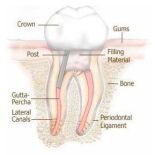 |
| Step 4: Rebuilding the Tooth A temporary filling material is placed on top of the gutta-percha to seal the opening until the crown is prepared. |
Step 5: Extra Support In some endo therapy cases, a post/core is placed inside the tooth in order to provide extra support for the crown. |
Step 6: The Crowning Touch The crown is fabricated and cemented onto the tooth structure. This is the final process of endodontic therapy. |
|
You can also view a 10 minute root canal procedure on the video to the right, provided courtesy of Dr. Jerry Gordon of Dental Comfort Zone. Note of Caution: This video may be considered too graphic for some individuals and it is therefore recommended that it not be viewed by young children. |
Post-Operative Care
Once the root canal therapy is completed, there may be changes to the tooth which involve brittleness, discoloration, and inflammation.
When the pulp is removed from a tooth, that tooth becomes more brittle. Care should be used in order to avoid a fracture or chipping the tooth.
The tooth is also considered non-vital and may become discolored over time when pulp tissue is removed from the tooth. In most cases, the discoloration poses no threat to the tooth and can be treated with a teeth whitener product.
For a few weeks, soft tissue inflammation may also be noticeable. This is normal following this type of dental surgery. But if it does not subside and the pain continues, contact your dental provider as soon as possible. It is not uncommon for the procedure to be retreated for various reasons, the most common being that infected pulp still remains in the tooth.


|
|
|

Advertising

